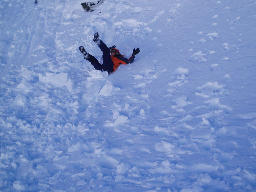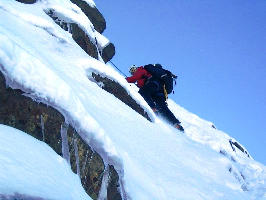
I first heard of Moonarie from chatter around the Arapiles camp ground. Tempting tales of great routes in the outback that are seldom climbed and have a serious and isolated feel about them. We arrived after dark and the sight of the scorched red sandstone glowing in the light of the golden sunrise was promising. The scale of the cliffs became apparent during the hour long hike in. To the left and right, the cliffs stand solemnly with blank faces, broken by bulging buttresses and soaring corners. These main cliffs offer 3-4 pitch adventure climbs. However the highlight of Moonarie is the 50m Great Wall, sitting proudly at the end of the crag. The Great Wall is a slightly concave, blank looking wall, which is covered in 3 star classics. People rate these routes among the best they’ve ever done; they’re amazing! Location: In the Flinders Ranges, South Australia, about 5 hours drive north of Adelaide. The campsite is about 10 minutes drive from Wilpena Pound Resort, and from camp it’s an hour walk up the hill to the crag. Climbing: Predominantly trad routes from 45 to 130m long. Decent from the top usually involves a scramble down the central gully. Bring a full trad rack. Grades: 9 – 28. Great long classic adventure routes from grade 12. 550+ routes. Season: The area is on the fringe of the dessert, meaning summer is hot and winter is cold. March to May and September to October are the best months. Accommodation: Free camping under native Calatris Pines, on private land. The track from the road is usually okay for 2WD. No water or loos, so bring a shovel! Alternatively, Wilpenna Pound Resort has cabins etc, and is a ten minute drive away. Services: Stock up on the way there as Wilpenna Pound Resort is very expensive. There are climbing stores in Adelaide. Guidebook: ‘Moonarie: A Rockclimber’s Guide’, by Tony Barker, is the only guide to Moonarie. It’s vague, full of errors, and hard to use. Although it looks like a relic from the 70’s, the last edition was actually published in 2000. Check www.climbingclubsouthaustralia.asn.au for updates. Restday Activities: The Flinders Ranges are spectacular Australian style; baren, red, vast etc. Fun to explore for a day or two, but look out for emus and roos! References: www.chockstone.org, or www.climbingclubsouthaustralia.asn.au to contact Adelaide climbers, and getting answers to Moonarie questions. And Remember: amazing burgers at the Port Augusta Truck Stop, just off the main road, and ‘Downwind of Angels’, 19, is THE most amazing climb ever! Mike O’Brien AIC 2007 AIC 2007 – Week 1 Monday Morning; I have just discovered another bruise and I feel like I’ve spent the weekend in a tumble dryer. I wonder if anyone else feels like this? Welcome to AIC 2007!! The weekend started without a hitch. The buses got away on time, there was no traffic to contend with – Kebabs at Bulls proved to be slow, but everyone was fed – and miraculously the 4x4 bus managed to get all the way to Tukino hut!! Apparently the first time in AIC history. After a short briefing of the day to come the new AIC students tumbled into bed at the relatively timely hour of 1am. Saturday dawned with that beautiful crisp freshness that you only get in the mountains. As the sun began to rise you could tell it was going to be a cracker of a day. No hint of the murky low pressure system that had been hanging over us for the previous few days. The AIC students were up and about (Hey, so were the instructors! – Ed) – not quite bright eyed and bushy tailed – but up all the same at 6.30am for a good wholesome breakfast. Then we were off. Divided into our student groups we departed on our separate ways - Myself and Kate McKenzie with our instructor Pete de Joux and Assistant instructor Paul Mason. After spending some time familiarising ourselves with walking on steeper terrain without crampons we came to the first real lesson of the day: Ice-Axe Arrest!! For any of you that have done the AIC course you will know what this involves: Step 1: Find very steep slope with good run out Step 2: Nervously Slide down on bottom Step 3: Nervously slide down on bottom with ice axe in hand Step 4: Fling self down and attempt to stop Step 5: Extract self from deep snow at bottom of slope, dry sunglasses, remove snow from neck Step 6: Repeat. Upside down, back to front, upside down and back to front! Over and over again….. Paul showing us how not to do it…. Once we’d established that the snow was possibly a little too soft to actually self arrest, and we’d all eaten our fair share of glaciated precipitation we stopped to catch breath, shake out our hoods and admire Pete’s beginnings of ‘The Snow Cave’. An exciting afternoon followed with our group traversing some steep ground and practicing pigeonholing. Then Pete decided we were ready to attempt a climb on some steeper terrain. Paul and Scott disappeared up the slope to set up a good anchor point whilst the rest of us waited expectantly, nervously and coldly for the call to climb. Kate went first, quickly tying in and setting off, happy to get moving again. She made good time – if she was nervous then she didn’t show it leaving me with a hard act to follow… Then it was my turn. My fingers cold I fumbled with the rope tying in. As I looked up I could feel the butterflies start.. surely they didn’t really expect me to go up there?? I kicked a tentative first step. It crumbled and I ended up where I’d started – the soft snow was not going to make things any easier for me! My second attempt was a little more successful and I managed to get some momentum. Driving the heads of my axe into the snow I kicked steps up to the first obstacle, rock covered by slushy snow. My heart was already racing and I could feel my legs trembling just slightly (‘just don’t look down’ I kept telling myself). Somehow I managed to traverse a little and manoeuvre myself up and over the rock. Then I was away, one kick after the other, axes slip