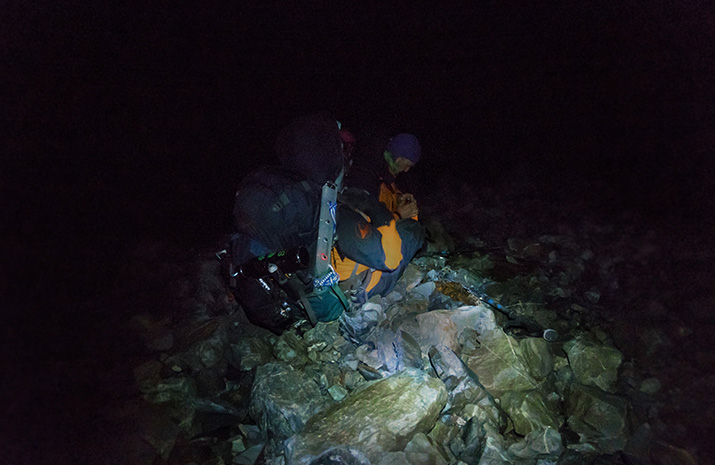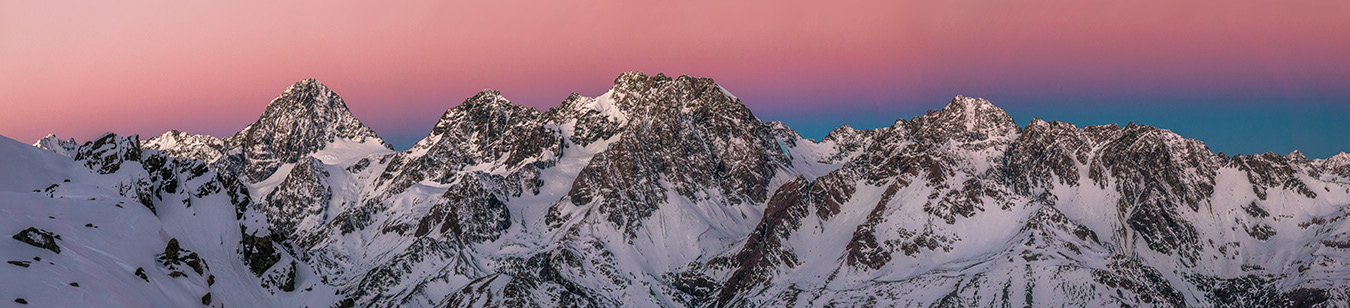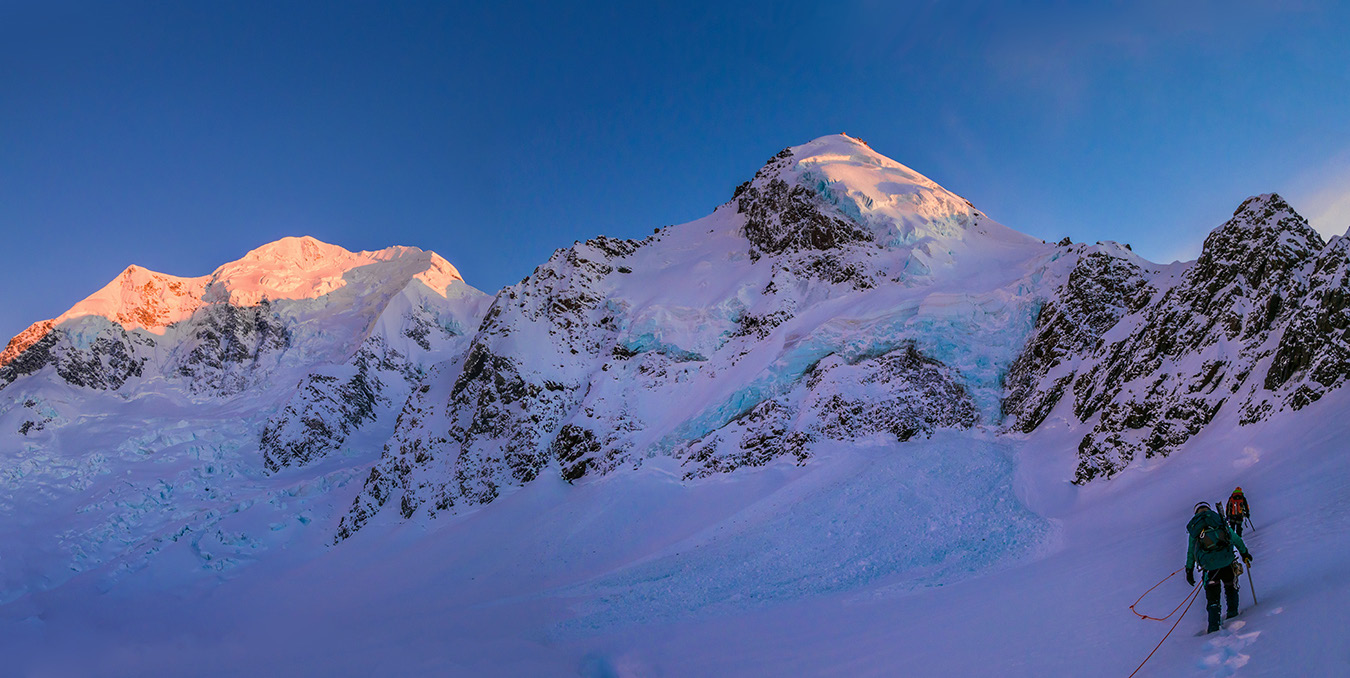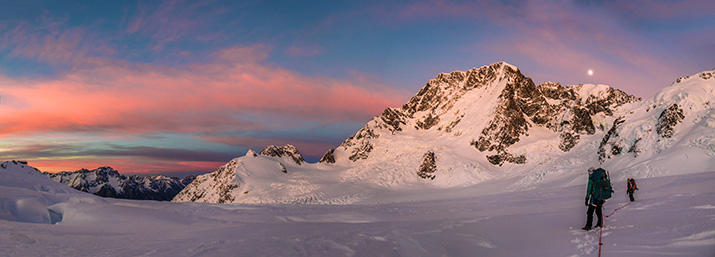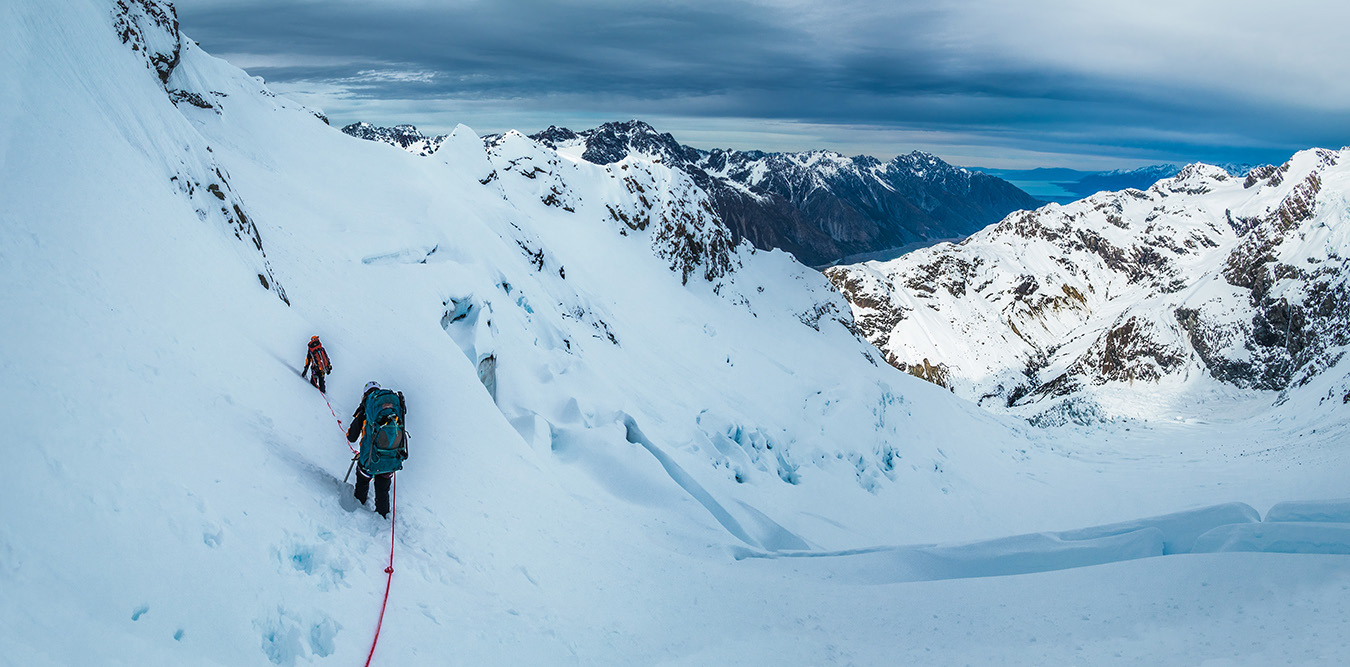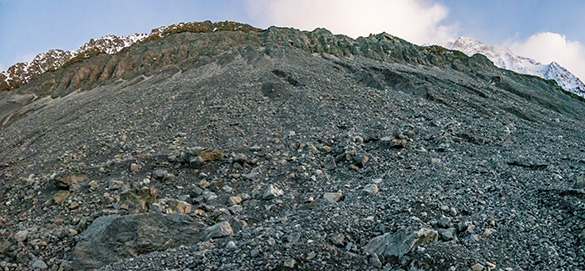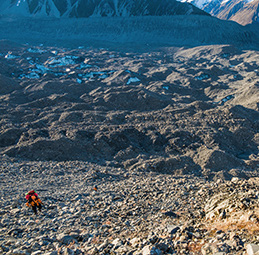
A Wellington Section trip to the Grand Plateau, June 2019 Words Simon Williamson, pictures Peter Laurenson I wasn’t that worried. It was getting colder and the snow was building up on the dark boulders around us giving them a soft fluffy look. The thwack of the heavy flakes hitting the outside of the Bothy bag was partly comforting in that it wasn’t rain. The calm was broken by a sudden powerful gust of wind that threatened to rip the Bothy out from under us. My pack was sitting between me and a cliff. The wind was pushing it in the wrong direction. This wasn’t going to be a good night. We were hunkered down behind a small boulder on a narrow rib of scree on the steep slope of the Boys Glacier. We hadn’t made it all the way down before dark and couldn’t see a safe way down in the gloom. The sound of large boulders whizzing down didn’t help. The bivvy site was the least vertical place we could find. There was nothing flat about it. The sound of basketball size boulders ricocheting down a metre away was a constant reminder of the random threat to our lives. An apprehensive mood was taking over along with the subzero temperatures and constant need to keep propping ourselves up to prevent sliding down the slope. There was no sleep. Then it started to rain. I was concerned about my toes which were getting very cold. We were in lightweight reflective bivvy bags under the Bothy bag. The instructions claimed that the material ‘is not subject to catastrophic rips’. It didn’t say anything about sitting on sharp rocks with your climbing boots on. They were soon full of large holes that let in the rain and formed puddles in the bottom of the bags. ‘What’s the time?’, ‘20:30’, ‘Another 11 hours till daylight.’ How long will our luck hold out before a boulder takes us out? Sometime before midnight the clouds lifted in the east and the moon came out. We could see enough to carry on down the scree slope. Moving seemed to offer a better chance of survival than a static target for the next volly of rocks. ‘Let’s go down’ I said and we all agreed. Peter stepped off the rise into the boulder race. Though the wind drowned out our voices within metres, I could see the red dot of his torch as he traversed across and down. Another sickening clatter of boulders. I saw Peter duck low in an attempt to get out of the way. The boulders shot past on either side leaving him unscathed. He kept going. We packed the rest of our survival gear and headed across. Skating down the moving scree. Carolyn sat on her bum and tried to bumslide down the scree while I tried to stay upright. Not long later my torch beam reflected the bottom of the climb and we stepped off the scree slope onto the Tasman Glacier. We moved back far enough to avoid the cannon balls bouncing and landing with a thud onto the glacier. The rain was having a short break. It was almost pleasant. The moon added to our torch light. Cold, tired and alive, the Ball Shelter and a warm dry bed was only a few hours away. I got out my GPS to get a fix on its location. Glad that the ordeal was over, our optimism renewed, we began the slow march up and down the frozen wasteland of the Tasman Glacier. Initially the plan had been to fly into Plateau Hut, climb Mt Dixon, then walk out over Cinerama Col and back to the carpark. The weather window promised two or three good days. The first good day was used flying down from Wellington then picking up a car, driving to Mt Cook and taking a helicopter up to the hut. On the way to the hut the pilot flew over our intended descent route so we could get a look at the slots and identify a way down. At the time this seemed the most challenging aspect of the trip. Landing on the plateau just outside the hut’ we watched the chopper fly away and carried our gear inside. There was no-one in the hut when we arrived but we knew Simon and Pippa had flown up earlier. They returned shortly after and we discussed our plans for climbing Mt Dixon, then walking out over Cinerama Col. Pippa offered to collect our car from the airport and leave it at the end of the Ball Pass Road. This would save us some time at the end of a long day not having to try and get a lift or walk all the way back to the airport. This image - Simon and Carolyn preparing to descend in moonlight to Tasman Glacier The Maltebrun Range viewed from Plateau Hut It was freezing in the hut at 4am on Wednesday. We had to melt snow as the water tanks were solid blocks of ice. Crampons on and roped up, we stepped out the door at about 5 a.m. and headed off across the plateau toward Mt Dixon. The going was slow. The snow was soft and dry and wouldn’t form a snowball. It took us about 2 ½ hours to get as far as the base of the climb - a steep 200m chute leading up to the ridge. We managed to get over the shrund. Peter led the first pitch. The snow was so soft, we couldn’t even get a T slot to hold. Carolyn headed up and took a stand next to Peter, followed by myself. As we weren’t able to protect the climb and felt that coming down would be almost impossible, we decided to call it a day and return to the hut. A good decision all round. The hut was cold and empty when we got back. Pippa and Simon had left, leaving the place to ourselves. Next day we would tackle Cinerama Col. We decided that we wouldn’t leave before daylight so as to see enough to avoid the crevasses on the Hochstetter and Linda Glaciers. Around 7:30 a.m. we roped up and headed out the door. It was still dark but the moon was up which, along with our torches, provided enough light to pick out the shadows of crevasses. I led off with Carolyn tied on to the rope in the middle and Peter at the back. We traversed our way down to the glacier then up and around the top of the crevasse field to avoid the most obvious slots. It was slow going. The snow was still soft and dry. Conditions hadn’t changed since yesterday. It felt like it was taking forever. After about 4 hours of travelling we arrived at the top of Cinerama