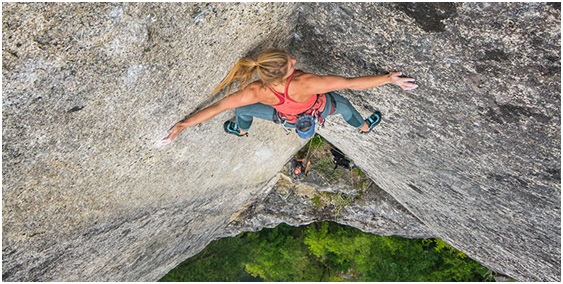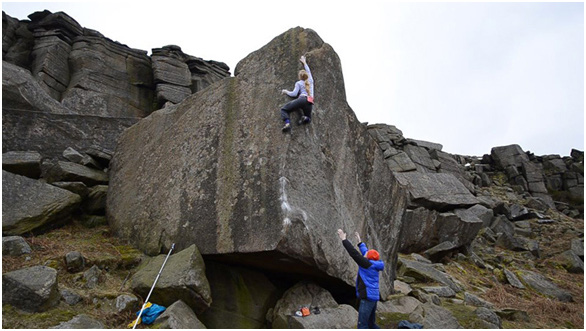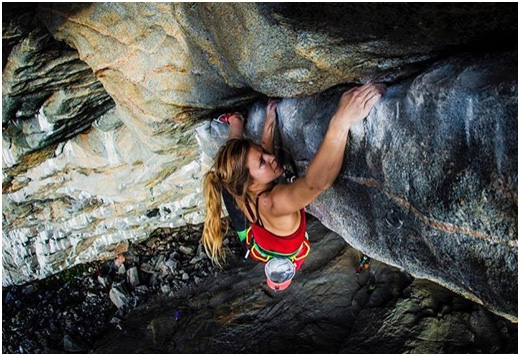
On 21st March, New Zealand came to a standstill. Level 4 Lockdown had started. Two weeks into it, I found myself couch-ridden due to a not insignificant injury (long story which we will not go into here). My pre-Covid, pre-injury, overflowingly hectic lifestyle came to an abrupt halt. I was used to racing between full time work, home life, the indoor climbing gym to train hard, then driving on average 12-14 hours per weekend to any of our ‘closest’ crags for the weekend warrior sends. What is a climber to do without rock to cling too? Let’s face it, there’s only so much finger boarding, Netflixing and instagram scrolling you can bring yourself to manage each week. Up popped an instagram post on my feed by one of my all time climbing heroines, Hazel Findlay. Most of you have probably heard about her ballsy daring feats of fearlessness and if you haven’t, you should definitely search YouTube to watch her first nail-biting British female ascent of the nerve wracking trad line ‘Once upon a time in the Southwest’ E9 (grade 34/5.14c). Her instagram advertised that she had recently started up her own podcast ‘The Curious Climber’ with her friend Mina Leslie-Wujastyk (I think I have the spelling right?). I’d never heard of Mina before but turns out she’s a pretty bad-ass climber too, bouldering 8B/V13 and sport climbing 8B/5.14b/33 all over the world. With a slight degree of scepticism, I plugged in my headphones and took one of their podcast episodes for a spin. I’m relatively new to podcasts as having such a jam-packed lifestyle I’d never really had time to listen to many before. What possible new things could I learn from a climbing podcast that I couldn’t glean from the countless videos on YouTube, Vimeo or Instagram? So so so much! These podcasts helped to speed up the hours spent on the couch. 60 minute chunks flew by. Not only do they interview athletes at the tops of their field but also scientists and researchers who are brimming with knowledge about the roles psychology and gender play on athletic performance. Above - Mina nails first female ascent of Careless Torque 8A+ (V12) Left - Hazel Findlay on the trad climb 5.13d (31) ‘Tainted love’ in Squamish Refreshingly geared towards feminine climbing needs, Mina connected with a top Indian female climber (Prerna Dangi) who shared her battles not just climbing in a country that can be difficult to access the right climbing gear and equipment for alpine missions, but also in gender issues as trying to be a strong female in a male dominated society. It made me so grateful to live in a country where females can go on girls-only climbing trips without being harassed by macho males. I also learnt way more than I needed too about the impacts of the menstrual cycle on female sports performance. The ‘Women are not small men’ episode completely revolutionised my attitude towards climbing training. Of course women need to train differently to men, given our drastic hormone changes each month, not to mention our completely different body types. Also the majority of the research into sports training and performance has only been done on half of the population, i.e. those that don’t have ovaries. It was a fantastically educational interview with our very own Stacy Sims, a research scientist based at Waikato University, who is pioneering more research into women’s specific sports training. Another encouraging nugget of information that was shared on this episode by Mina was that some of the global stats from climbers around the world show that females don’t need as much finger strength as their male counterparts when climbing the same hard grades, given our lower centre of gravity and flexible hips. We can more easily stay on the wall with the lower parts of our bodies compared to males, woohoo! So no excuses ladies, use those flexible hips to your advantage! Check out Mina here. I was hooked on this podcast business. Sifting through other climbing podcasts listed in Spotify, unearthed the Enormocast. Chris Kalous’ velvety American drawl has been bantering with climbers since the end of 2011. He seems to know everyone in the American and International climbing scene or if he doesn’t, he knows someone who knows someone. He is an accomplished climber in his own right, free climbing trad lines up to 5.13b/29 as well as big wall climbing El Cap. The aim of his podcast he claims is to ‘demystify climbing while simultaneously building its mythology.’ If you have non-climbing friends who get bored with listening to your endless climbing send stories or how nervous you were at the run out from your last trad piece placement and you’re not sure it’s going to hold if you took a massive whip, this is the podcast for you. Hours of endless access to stories of all the climbing greats right in your headphones. Whether you enjoy short strenuous boulder problems, run-out sport or trad climbing, or icy alpine mountaineering adventures, Chris has you covered. Somehow, Chris’ laid back charm helps to put these climbing legends at ease to really open up and share their insights and emotions about their passion for the sport we all love, even touching on some sensitive topics. He conducted a surreal interview with Brad Gobright, a couple of years before his recent tragic accident, just as he was starting to make a name for himself in the realm of trad climbing. Quinn Brett opened up about her major life changes following her fall while climbing the Nose in 2017, leaving her paraplegic. Chris even manages to get a confession from Adam Ondra who lives and breathes everything about climbing that at the time of the interview he (Ondra) ‘hates the speed climbing’ part of the combined Olympics event. Tommy Caldwell, Lynn Hill, Alex Honnold are some of the other superstars he’s managed to snag time with. I always enjoy learning new things from whatever I read, watch or listen to and something new I learnt from one of Chris’ episodes is that ‘bouldering is 99% failure and 1% succes