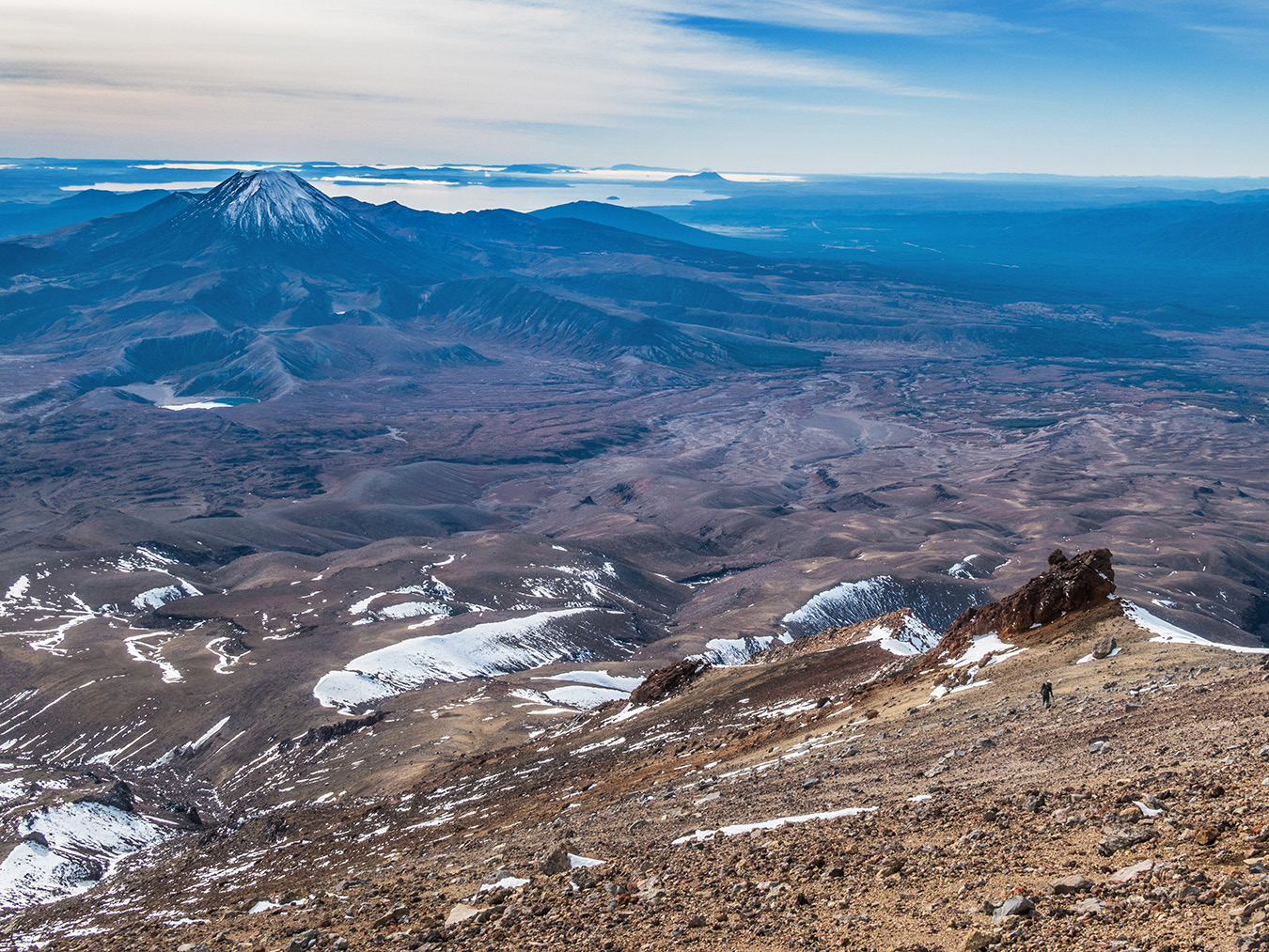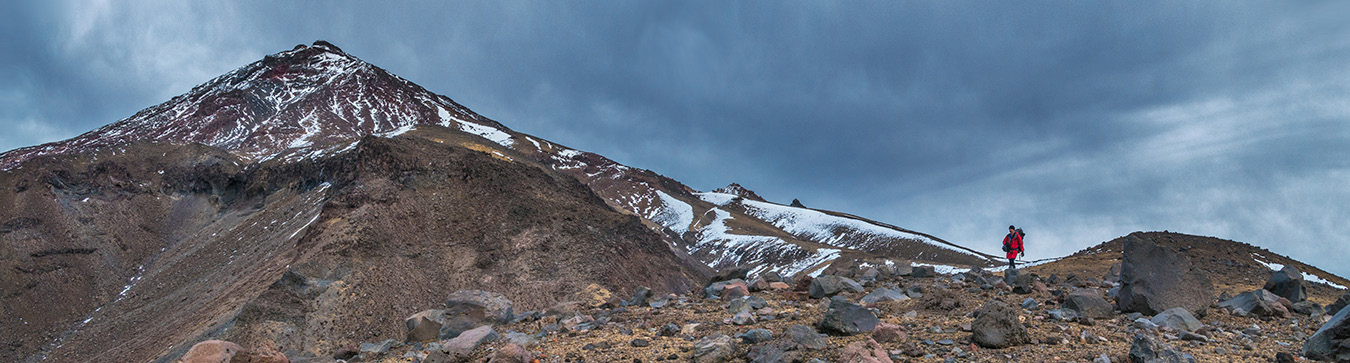
A day climb from Waihohonu Hut to Te Heuheu, May 2015 By Grant Christian A view north from about 2,500m, down Waihohonu ridge, May 2020 Photo: Peter Laurenson I became interested in this trip after reading that Te Heuheu Peak via the North East Ridge was the first peak that was climbed by climbing parties. The first recorded climb was 12 December 1877. The climb would start from the site of the Waihohonu Hut. Sometimes horses would be taken higher up the mountain. The peak is about 11km from the old Waihohonu hut in a straight line and the height gain is 1,600m, so it is a much longer trip than climbing, for example, Tahurangi Peak from the top of the Turoa road. Despite an unfavourable weather forecast Mary Lund and I decided we should go ahead with this trip because the forecast is unreliable and the weather can vary enormously on different sides of the mountain. I was glad we made that decision. We travelled up on Friday night and parked up the Tukino road (I’ve heard that parking by the Desert Road is not the safest place to park). We didn’t depart for Waihohonu Hut until about 9 p.m., arriving just before 11 p.m. Next morning we were away at 7:15 a.m. The weather was good and we could see Te Heuheu from the hut. It was a short walk to the old Waihohonu Hut from where we headed into a small patch of bush. This was straight forward travel and we soon emerged into alpine scrub which was harder work, and proved to be quite tiring as we slowly headed up. We eventually got past the scrub and it was easy travel across a barren landscape of loose rock and dirt. I really enjoy the barren landscape of Tongariro National Park. I love the wide open space, reminding me of a lunar landscape. The peak was still a long way in the distance. The occasional cairn showed that we weren’t the first people to go through here. They were the only markers of our route. It was pleasant to be out with no other people in sight and very little sign of other people having being through here. The slope was climbing at an easy angle and we could see in the distance what appeared to be the best route. It was apparent that the angle of ascent increased significantly, closer to the peak. At about 2,100m we started to climb steeply. It was now after midday and I knew that it would be unlikely we could get back to the hut before dark. The climbing became a lot harder with loose rock and soft scoria underfoot. It reminded me of struggling over glacial moraine. It was much harder than the approach along Pinnacle Ridge. We slowly but steadily gained height and reached the top about 2:15 p.m. It had taken seven hours to reach the top. The weather had been kind to us but the wind on top was stronger and very cold, so we didn’t spend much time enjoying the views. The trip down was made a lot easier by the soft scoria that had made it hard work going up. To avoid the difficult walk down through the scrub we headed east once we were part way down and dropped into a dry stream bed. This avoided the scrub and soon linked up with the around the mountain track. From here it was an easy track to follow back to the hut with the final part of the journey being in the dark. We arrived at the hut at about 6:15 p.m. The return trip had taken only four hours. In total it was an 11 hour day. The hut was very busy on our return and was terribly overheated, making it very unpleasant. This is a great hut with battery powered lights and solar heated water for dishes and cooking - a great place to stay in the off-season. We both had tea and went to bed early after a very tiring day, satisfied that we had achieved our goal. Sunday morning was an easy walk back to the car in pleasant conditions. A view, looking southwest, back to Te Heuheu from about 1,600m, May 2020 Photo: Peter Laurenson