
Trip leaders: Emily Shrosbree & Tiffany Shih
Participants: Emily Shrosbree, Tiffany Shih, Nye Williams Renouf, Mathew Denys, Stuart Meiklejohn, Emma Coombe, Jon Keyzer and Luke Tearle
Author(s): Emily Shrosbree, with excerpts from Nye Williams-Renouf and Jon Keyzer
Leading a winter trip to the East Ridge of Taranaki maunga comes with quite some weight. It’s a serious grade 2+ climb, prone to icy conditions. In 2013, the year I did my introductory snowcraft course, a group from the NZAC Auckland Section came to grief on this route, being drawn up the mountain too late in the day, caught out by the relative ease of ongoing ascent versus down climbing on the exposed slopes. You can read and learn from this tragic event here: Too high, too late… two dead
This incident has definitely influenced my alpine career, and the lessons from the coroner’s report are used in our Section’s trip leader training. I’ve climbed the East Ridge several times in summer — it’s a fantastic day scramble. I was keen to try in winter having built up more confidence on steeper terrain and with rope work, but it was still an intimidating prospect.
There were almost 20 people signed up to this trip. We kept it to a group of 8, even with two leaders (myself and Tiffany), because things get slower and more complicated with bigger groups.
We stayed at Tahurangi Lodge, run by the Taranaki Alpine Club who are very accommodating of visitors from other clubs. The lodge has a kitchen and drying room so is a very comfortable option for staging a day climb. We parked at the Stratford Plateau and walked in along the Around the Mountain track, which took almost 2hrs with 400m of ascent. There was snow most of the way, and those at the front of the group were plugging steps.
We had a group briefing over breakfast at 5:45am. We checked everyone had sufficient emergency gear (bothy shelters, radios, first aid kits, PLBs, insulated mats, avalanche gear) between our four climbing pairs as we would be operating independently once we were into pitching territory. We agreed on a couple of key decision points for the day. We had a turnaround altitude of 2200m, as well as a turnaround time of 10:30am at this point. This is the point at which the slope becomes noticeably steeper and we anticipated needing to start pitching from. A 10:30am cut-off at this location, we reasoned, would mean leaving 4 hours of climbing time to reach the summit by 2:30pm, which would then leave 3hrs+ of daylight to descend into the crater and down the northern route to the lodge.
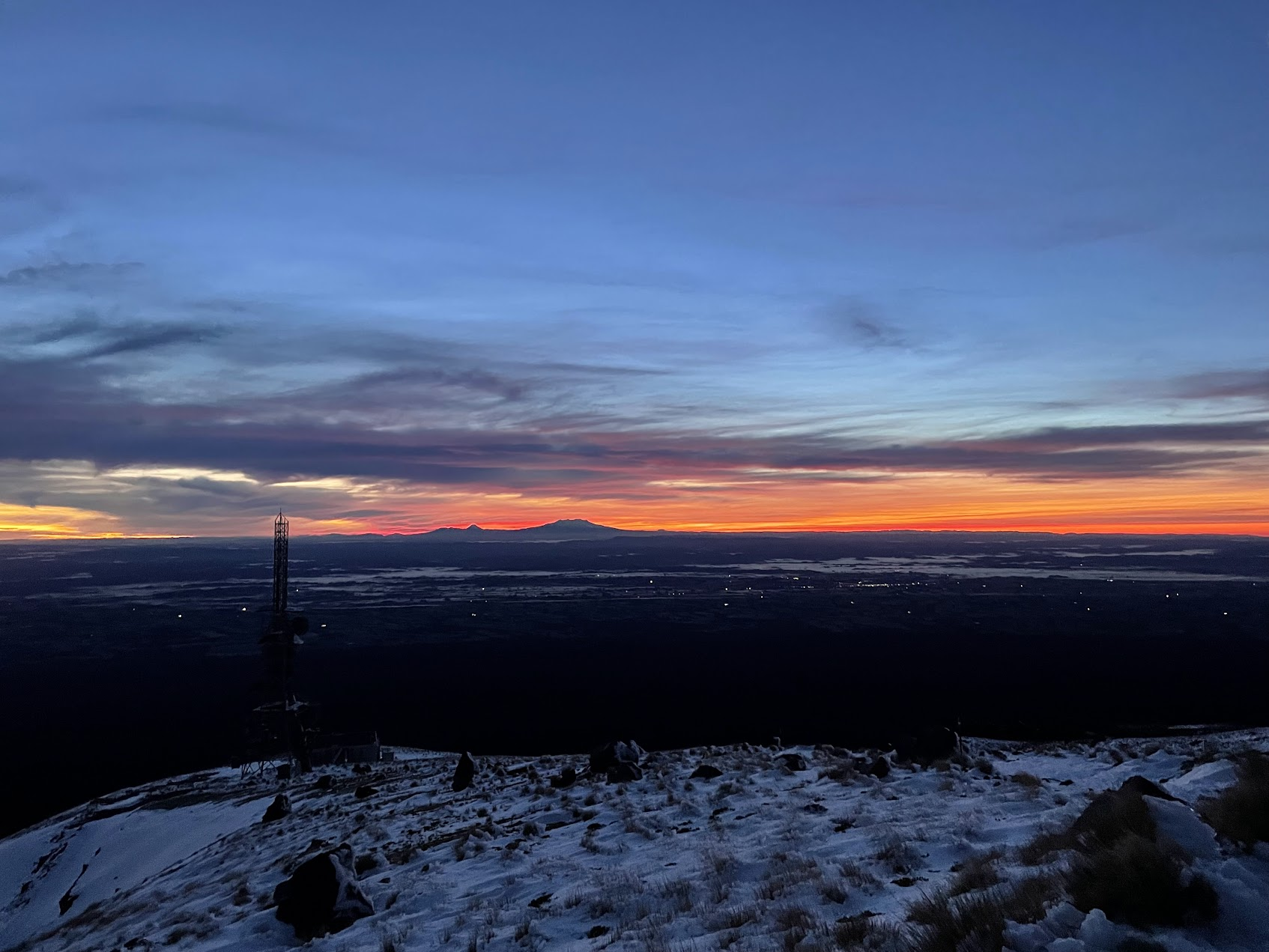 Photo: Emily Shrosbree
We were out the door at 7am with crampons on straight away. We stuck as a group of 8 for the traverse across to the East Ridge. We picked up the foot trail just above the lodge, which took us in and out of multiple gullies on a rising sidle, then climbing up 100m or so to enter into the gully flanked by the Organ Pipes. Once in the gully we observed a river of ice marbles flowing past us — mildly disconcerting and also mesmerising. The gpx we were following would have had us head directly up the gully where the ice river was flowing from, so we opted to climb out to the left to gain the ridge above Warwick Castle.
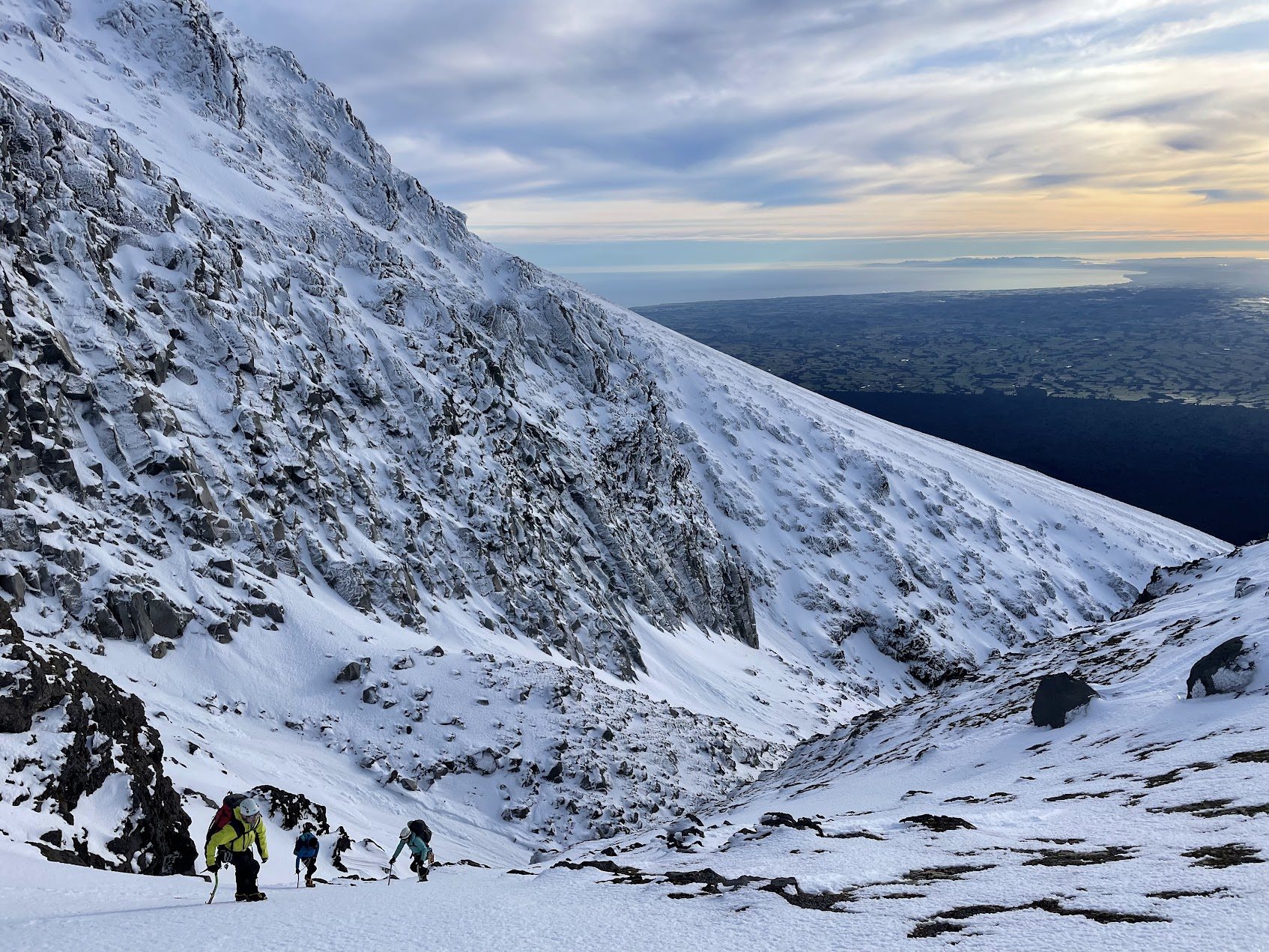 Photo: Emily Shrosbree
We then continued a rising sidle across to the East Ridge itself. This section was covered with stunted rime ice and the wind was throwing clouds of ice dust, with some bigger chunks amongst them, down at us. Mid-crossing the group gathered for a ‘should we carry on’ chat, deciding we’d continue across to the ridge itself where we’d be above the ice clouds before we made a call. This was at about 2000m, around 9:30am. Here there was a definite split between those feeling very comfortable and full of stoke to continue, and those already wondering how uncomfortable the downclimb from our current point was going to be.
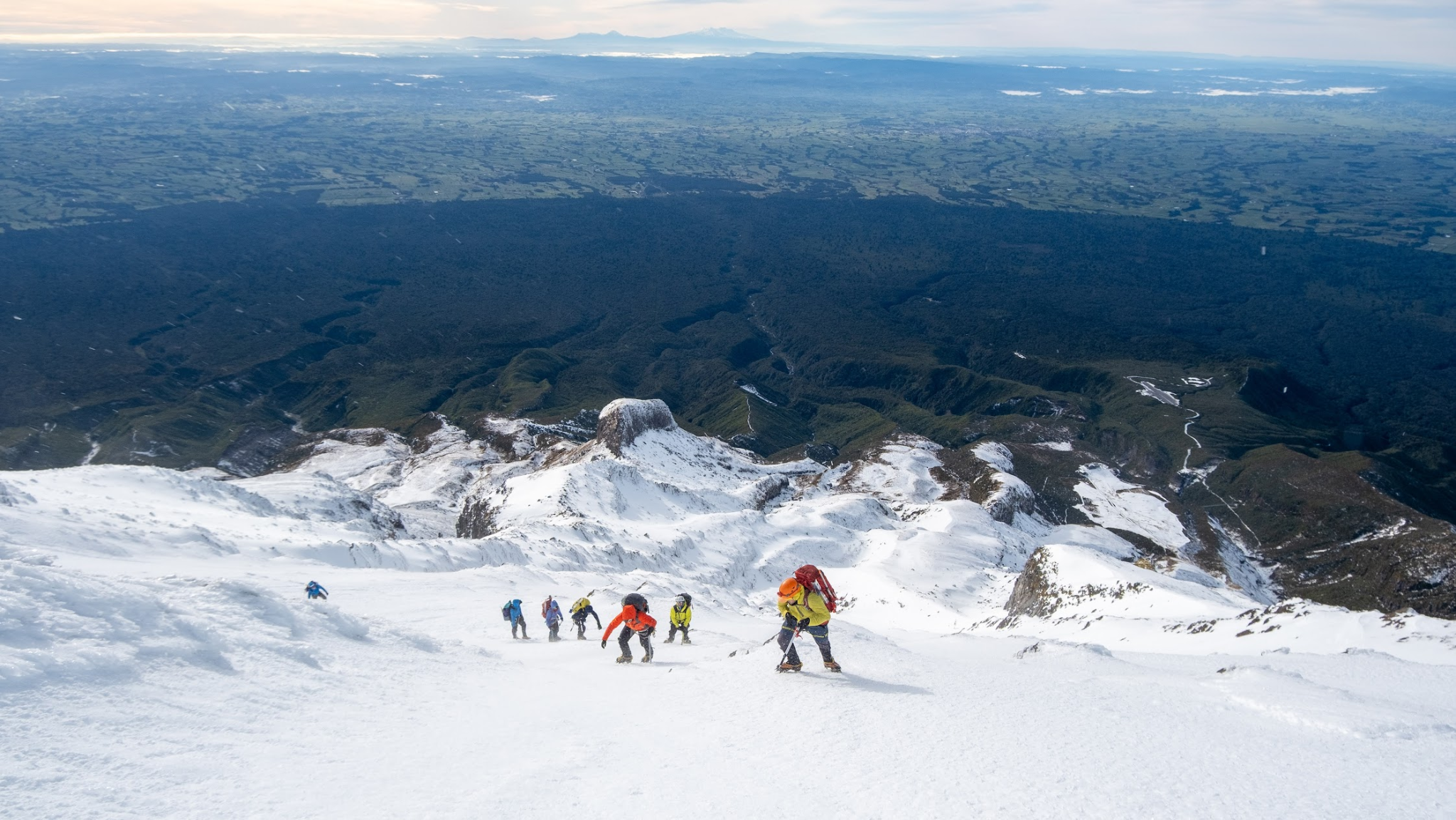 Photo: Mathew Denys
Two pairs started descending, and lower down on the East Ridge did some pitching practice mostly out of the wind. We then dropped all the way down to the Manganui ski field (complete with skiers!), before walking back to the lodge on the Around the Mountain track where we bumped into a solo climber who had soloed to the top of the Shark’s Tooth and abseiled off some rime ice into the crater.
Better to have tried and failed — Nye and Mat
Mat and I still felt comfortable, so decided to give it a go. After walking up to the obvious change in grade at approximately 2200m, we stopped to build our first anchor. While we were roping up Jon and Luke passed us, having decided to solo a little further first. We briefly considered following their lead, but neither of us was tempted to forgo the rope in the conditions.
I then led the first 60m pitch over the first two lips. Despite easily putting in a snowstake for protection at 30m, it quickly became clear as I continued climbing that the ice beyond that would not take another stake. After prolonged attempts in multiple spots, I conceded temporary defeat and downclimbed to the 30m stake where Mat joined me before traversing rightward up a different line — also to no avail.
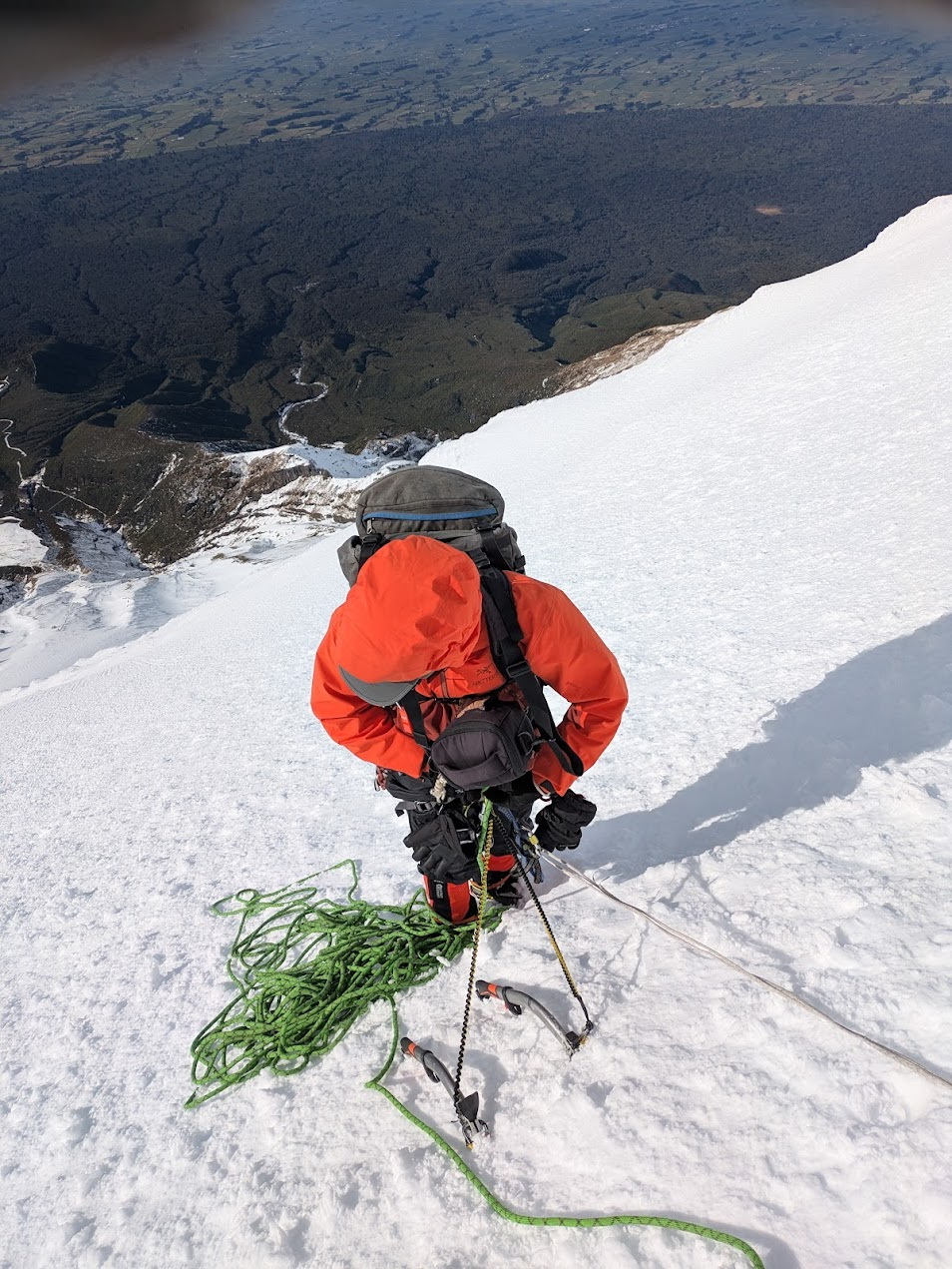 Photo: Nye Williams-Renouf
At this point we were pretty frustrated, particularly as we watched Jon and Luke merrily fly out of sight side by side without the inconvenience of placing protection. Assessing our options, we concluded we didn’t have many. We both felt comfortable on the terrain, but neither of us fancied soloing into the harder steeper conditions ahead without the insurance of an anchored rope, and we knew we didn’t have enough ice screws to rely on them alone. Reluctantly we decided it was time to turn around.
From there we pottered back to Tahurangi Lodge, looking back occasionally to cast envious glances up at Luke and Jon. A good portion of our descent was spent debating if they had simply done a better job of placing stakes than we had, but as we retreated we noted their rapid initial pace had slowed significantly now they were also pitching. In the end their account of their experience reassured us that we had made the right call considering the gear we had.
All the way to the top — Luke and Jon
Text: Jon Keyzer
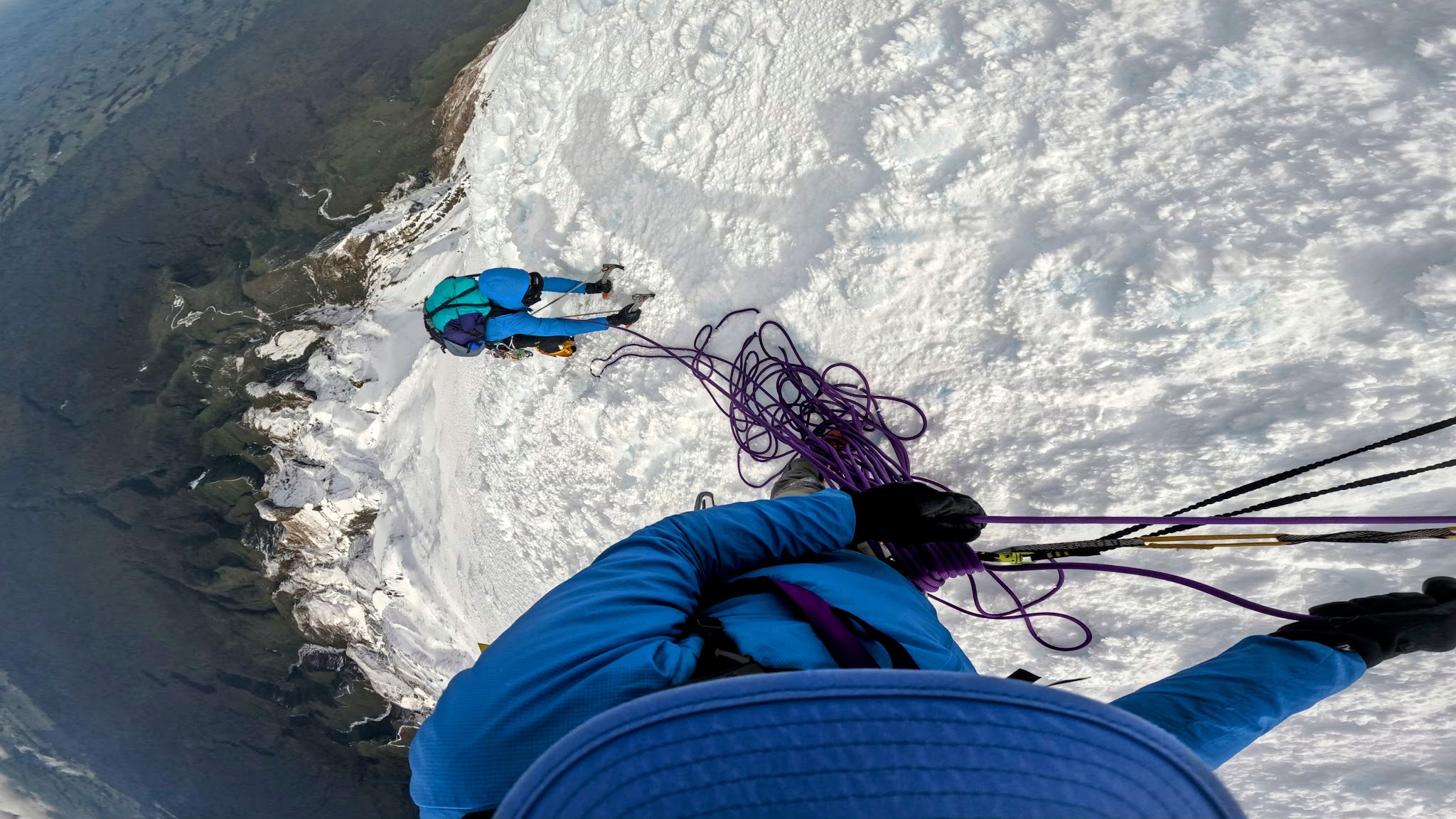
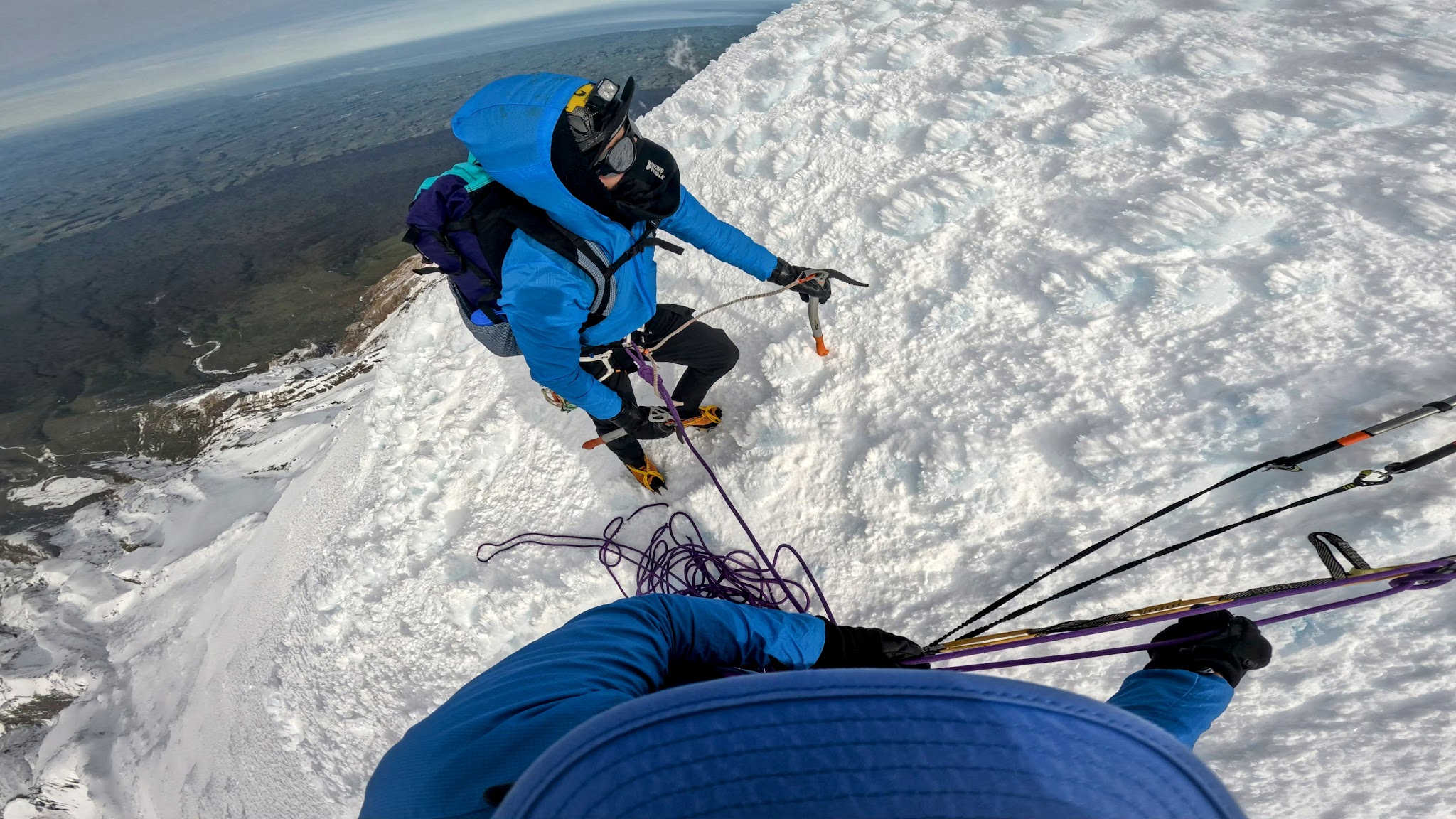 Photos: Luke Tearle, Jon Keyzer
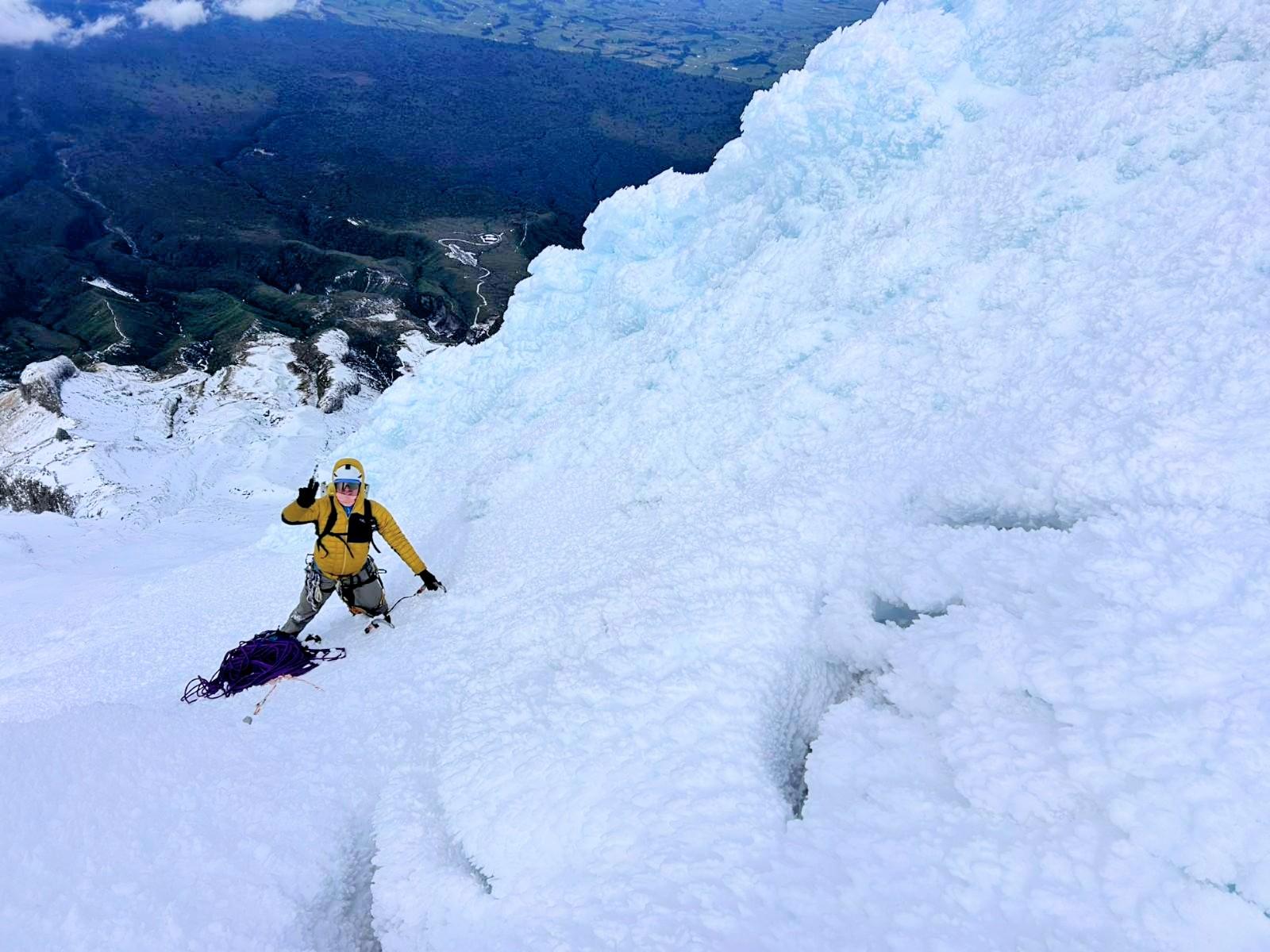
Luke and I soloed our way up to 2400m on the East Ridge, toting technical axes and a solid rack of screws. Conditions were icy but climbable, with steep crux sections demanding full focus. The route earns its 2+ grade. There is no room for error on the exposed east slope and it is clear that turning back without sufficient gear or time is a wise call. Our decision to solo higher up however saved several pitches and crucial time, and our technical gear proved essential.
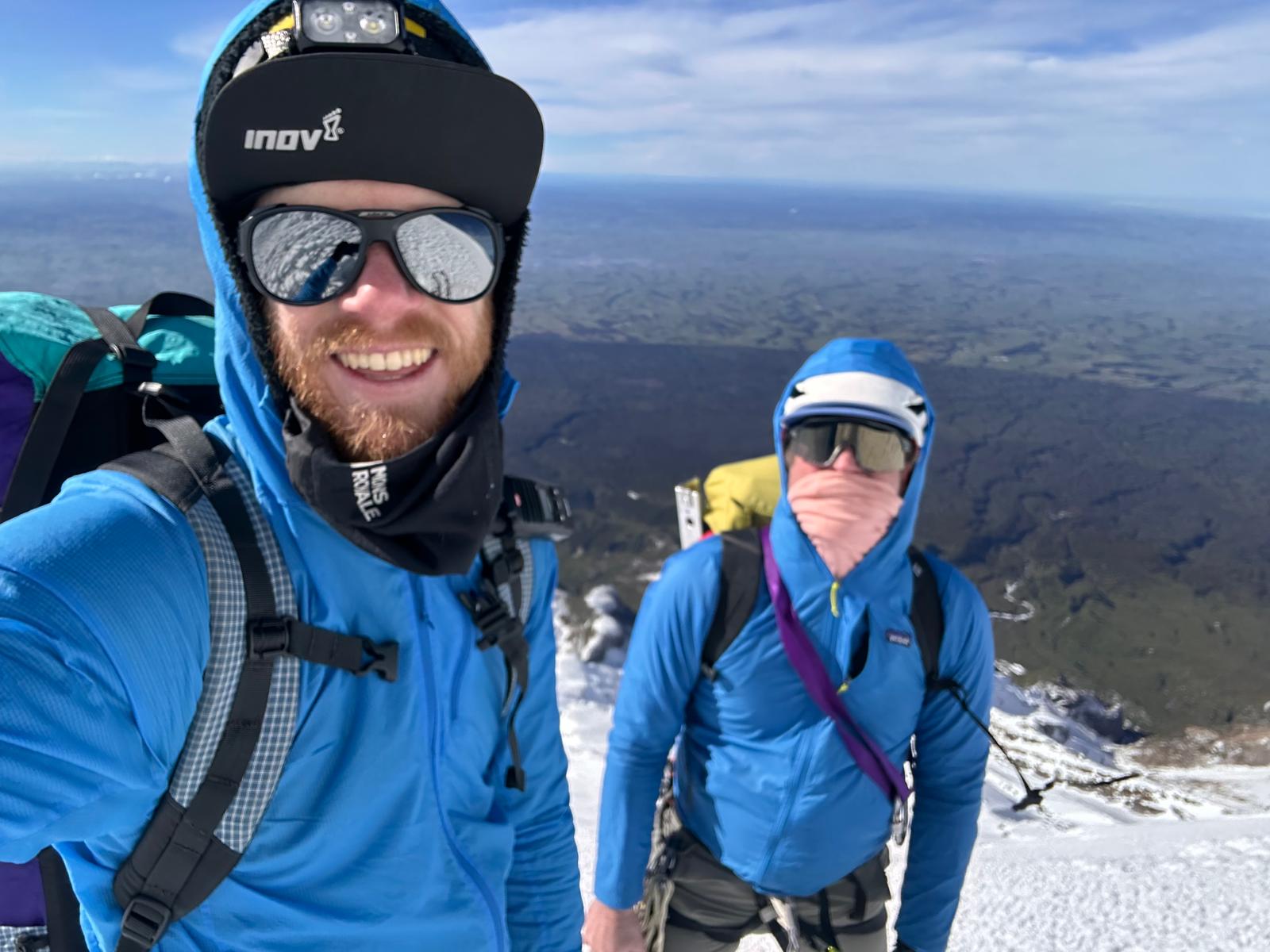
Above 2400m, we built our first ice screw anchor and climbed a few blustery and icy pitches, finally reaching the Shark’s Tooth by 2pm, just before our planned turnaround. With a brief celebration and few snaps, we were already sobered in the cold and clear of the need to make time down the mountain. As winds battered the north, we decided to downclimb and gradually progress toward the northern summit route, focussing first on losing elevation and getting out of the hammering wind. Exposed and exhausted, we made gradual and cautious progress in the softening but steep snow and rime ice.
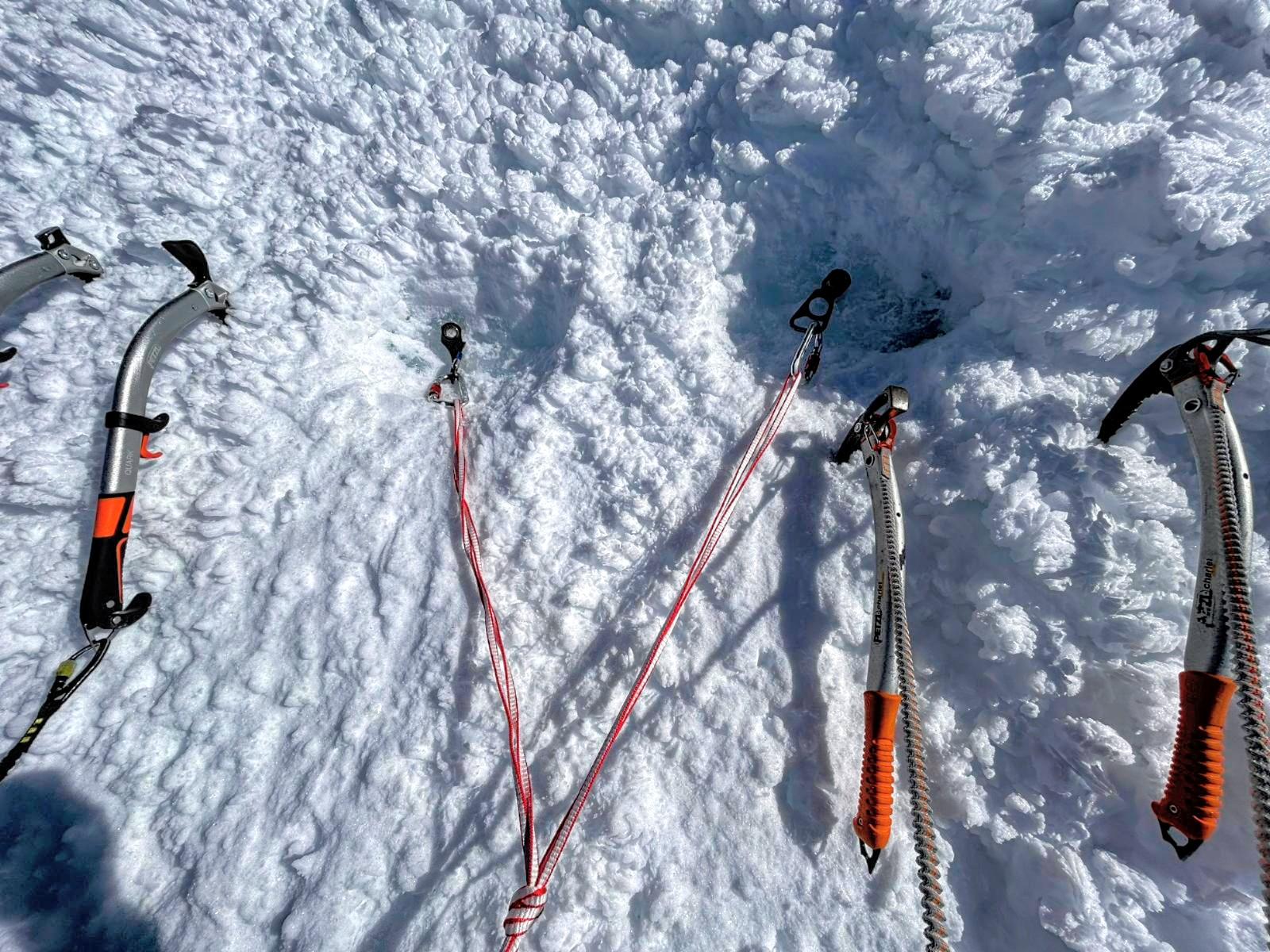
A billowing layer of dense cloud tumbled in as we lowered to 2000m. Wayfinding through bluffs and steep difficulties became trickier as we were gradually cloaked in a whiteout. We linked up with the poled northern route, following easier terrain and clear ridges seen from above. After eleven hours door to door, we arrived back relieved and elated at Tahurangi Lodge in fading light.
While we made all of the right decisions, Luke and I pushed the envelope about as far as we comfortably could under the circumstances. If we were less well-equipped or made slower progress, by pitching sooner for example, then we would not have made the summit. At the end of the day, the mountain always has the last word, and we are pleased to have had a memorable epic and made it back safe and sound.